By Ambassador Mark Overby // Photos by Jared Harber
There really is something special about riding a hardtail. It’s been said by many before me that there is a certain “purity” to riding one. It’s a long-running trope in the mountain bike world, but there is some truth in that statement. It’s what I started riding on almost 30 years ago and it definitely provided a solid foundation for all my future mtb endeavors. Every input from the rider, whether good or bad, has a very direct translation to what the bike does. My first one had a rigid fork, which added another level of unforgiving, yet genuinely satisfying accuracy to the ride feel. It made sense that coming from a BMX background it felt very natural, like a BMX with big (26”!) wheels. It didn’t take long for me to seek out something with a suspension fork as my riding progressed.
As the years went by and I started riding full-suspension bikes I pretty much always had a hardtail in the stable. From a basic, no-frills hardtail to lighter, more sporty hardtails, and on to huck-ready hardtails with long travel forks in the early 2000’s. I had steel frames, aluminum frames, and titanium frames. I learned to appreciate what each material had to offer, both good and bad. I rode them with and without gears and it was always a good time. Around 2010 I pretty much settled on steel as my frame material of choice and preferably with horizontal or sliding dropouts for easy single-speeding. It wasn’t long before I landed on a Kona Explosif. It was everything I was looking for in a hardtail at the time. I did play around some with over-forking it but ended up preferring around 10mm more travel than the stock fork. I rode a couple of generations of the Explosif before I started looking for something a wee bit more progressive/aggressive and strayed away from Kona for a few years.
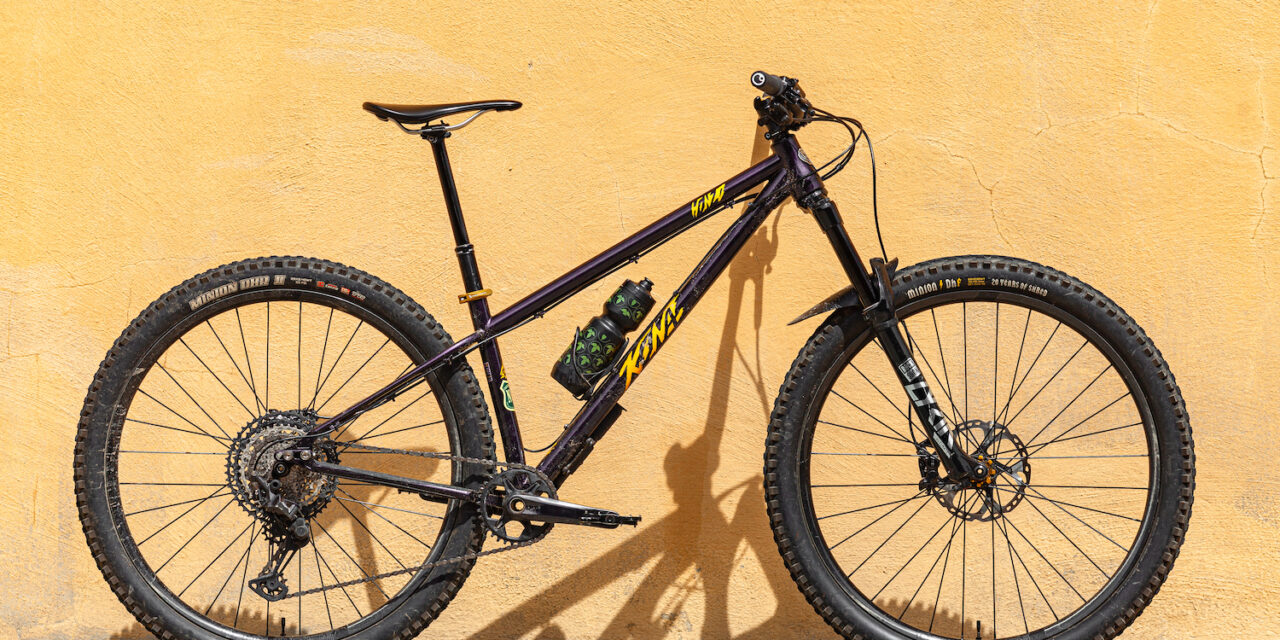
I started seriously thinking about a new hardtail a couple of years ago and figured I’d get one more season out of my bike at the time. I started looking at my options early this year and decided I wanted to try some flavor of Honzo, but which one? I considered all of the options, the aluminum Honzo DL, the steel Honzo ST, and the radical Honzo ESD. If I’m being honest the Honzo ST was my first choice. I wanted an all-rounder and I knew the ST would have the pleasant ride of a quality steel frame and the solid geometry that mimicked the Process 134 – a bike I love. My second choice was the Honzo DL, again with the same geometry as the ST in a slightly lighter, but possibly a touch harsher ride of an aluminum frame. Lastly, the Honzo ESD was the dark horse in the group. It was an intriguing option, but it just seemed like it might be a little too extreme for a daily driver. As it turns out, availability was the deciding factor and the Honzo ESD was what I could get my hands on. Most of the parts from my previous hardtail moved over to the ESD, with the exception of the fork and wheels as that bike had 27.5” wheels. I went with a 150mm RockShox Lyrik up front and a pair of Industry Nine Enduro wheels that had been moved around between my Process 134 and Process X. I’ve been riding it since mid-May and after 6 months on it, I can say it has definitely defied my expectations.
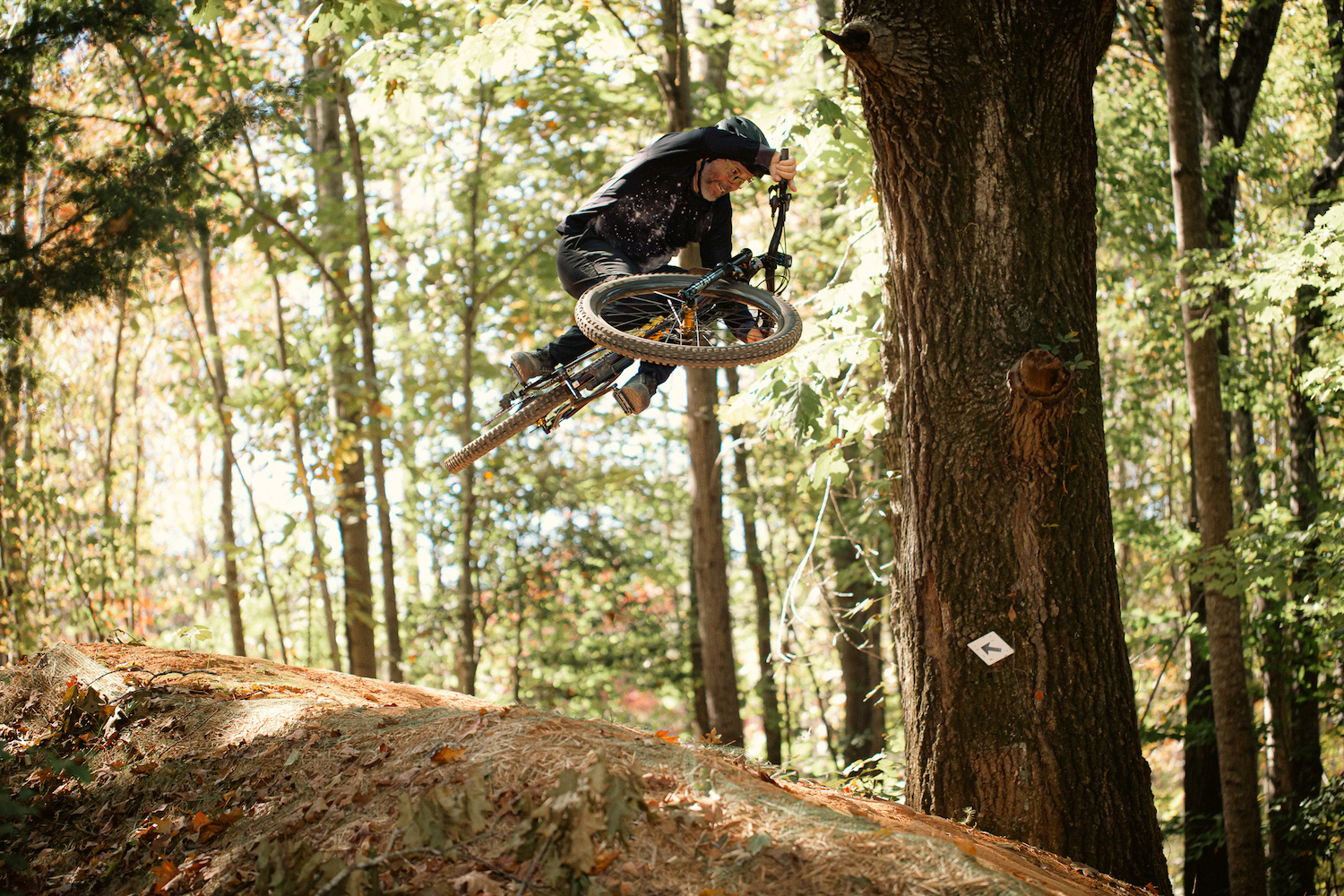
I imagined, first and foremost, that it would be a handful on mellow trails. Because of that I figured I wouldn’t be reaching for it as often as I have. On paper the geometry seems pretty wild. Even though I own a Process X and the ESD geometry pretty closely mimics that bike, the ESD is a very different animal. Maybe it’s the shorter, 150mm fork vs. the 170mm fork on the X or ability on the ESD to slam the rear wheel forward, making for a very short chainstay length, but it really is an easy bike to get on with. I typically decide which bike to ride based on the terrain where I’ll be riding and how much effort I want to put into it. If I know there’s going to be a lot of opportunities to get the bike in the air or it’s going to be higher speed, rougher trails I’ll usually grab the Process X and if it’s going to be a bit mellower and more pedally I’ll grab the 134. I’ve found that in either case I can grab the ESD and it’ll go pretty well. It isn’t quite as capable as the X, but if I’m on jumps or trails that I’ve ridden before it can definitely hold its own and if it’s a longer ride, it is pretty easy to grind out the miles on. It goes to show that the geometry chart doesn’t always tell the whole story of how a bike will ride and despite my early apprehensions about the ESD, it’s a bike that I really feel at home on.